

Your stomach knots up, your palms get sweaty and the appointment keeps getting pushed back. Many people feel nervous before a dental visit and there are practical ways to make that feeling smaller.
If you want to know how to deal with dental anxiety, a few small, realistic steps can change how a visit feels. The short answer is to name your specific fear first, then match it to a plan that fits. This guide is for Brantford, ON patients who have been putting off a visit. It covers what to do before, during and after your appointment and what to look for in a dental team. It also shows how Lifetime Dental approaches comfort.
Quick Answer: What Should I Do?
- Tell the office you're nervous when you book.
- Ask for each step to be explained.
- Agree on a hand signal to pause.
- Breathe slowly and bring music.
- Choose a time of day that feels calmer.
What is Dental Anxiety?
Dental anxiety is a feeling of fear, worry or tension about visiting the dentist or having dental treatment. When the fear becomes strong enough that a person avoids care altogether, it is often called dental phobia. In Brantford, Ontario, patients who feel this way can ask any local dental office how it supports nervous patients.
Where Do I Start When I Don't Know How to Deal with Dental Anxiety?
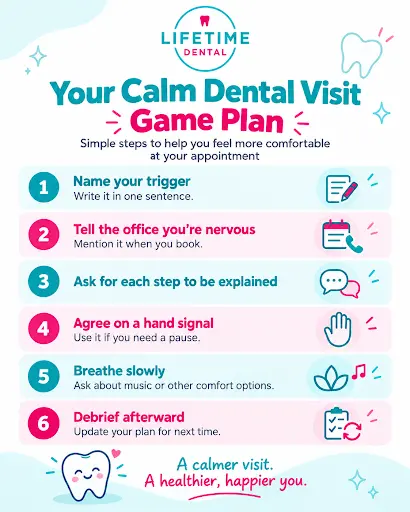
Start by naming exactly what you are afraid of. Dental anxiety is a broad label and the best fix depends on the trigger. Someone who dreads needles needs a different plan from someone who hates not being able to speak.
Common Triggers To Look For
- Pain or needles, including the freezing
- Feeling out of control while lying back in the chair
- The sounds, smells or vibrations of dental tools
- Embarrassment about the state of your teeth or how long it has been
- A difficult experience in the past
Turn Your Trigger Into a Short Note
Before you call, write one or two sentences about what bothers you most. For example: "Needles make me tense and I feel better when I know what is coming." Or: "It has been years since my last visit and I feel embarrassed about it."
Keep it plain and short. A note like this gives you words to use when the nerves hit. It also gives the dental team something concrete to work with.
Should I Tell My Dental Team That I'm Nervous?
Yes. Telling the team when you book is one of the simplest ways to make a visit easier, because it lets them plan around you instead of guessing. A good dental team will want to know.
What To Say When You Call
Mention it near the start of the call. You could say, "I get nervous at the dentist and I would like someone to talk me through things." Share your trigger note and ask how the office looks after nervous patients. Pay attention to the answer. A calm, unhurried reply is a good sign.
Ask For Each Step To Be Explained
Feeling worse when you can't see what's coming is very common. Ask the dentist to tell you what is about to happen before it happens and what you are likely to feel. Lifetime Dental says on its website that the team explains every step and answers your questions. Whichever office you choose, it is worth asking whether they work this way.
Agree on a Hand Signal
Before treatment starts, agree on a simple signal, such as raising your left hand, that means "pause." Knowing you can stop at any time can make it easier to keep going. Most people find they use the signal less than they expected, but having it matters.
How Can I Stay Calm While I'm in the Chair?
Slow your breathing, give your mind something else to do and, if the office allows it, bring someone you trust. These are small tools and they work best when you have practised them before the visit.
Use Slow Breathing
Breathe in gently through your nose, then out even more slowly through your mouth. Longer exhales can help your body settle. Try it at home for a few minutes a day so it feels familiar when you need it.
Give Your Mind Something Else To Do
Ask the office whether you can listen to music or a podcast through headphones. You can also choose a mental task that takes a little focus, like counting backwards by sevens or planning a week of dinners. The goal is to give your attention somewhere else to go.
Bring a Support Person
Ask whether a friend or family member can come along, even if they only wait in the reception area. Having someone to talk to before and after can take the edge off. Offices differ in what they allow, so ask when you book.
What Can I Do Before my Appointment to Feel Calmer?
Build a few easy habits into the day or two before your visit. You may not get rid of every nerve, but you can avoid adding extra stress.
Pick Your Time of Day
Choose the slot when you usually feel most settled. If mornings leave you rushed, book later in the day. If waiting around all day makes you more anxious, book the first appointment you can.
Leave Room in Your Schedule
Rushing makes nerves worse. Lifetime Dental's first appointment takes approximately 60 minutes, so plan some buffer before and after. Avoid scheduling a tight meeting right afterward.
Look After the Basics
Get a decent night's sleep and follow any instructions the office gives you about eating beforehand. If caffeine makes you jittery, go easy on it that day. Arrive a few minutes early so you aren't rushing, but not so early that you sit and stew.
What If I'm Afraid of Needles or Pain?
Tell the team that this is your main worry, then ask what they do to keep you comfortable. Lifetime Dental's website mentions pain-free freezing techniques, so it is a good topic for your first conversation.
Questions Worth Asking About Freezing
- What will I feel and when?
- Can you tell me before each step?
- How will I let you know if something doesn't feel right?
- What can we change if I'm still uncomfortable?
Asking these out loud often turns a vague dread into a few clear answers. It also shows the team exactly where you need extra care.
What If I'm Embarrassed About My Teeth Or How Long It Has Been?
Say so at the start. Your dentist's job is to help you move forward, not to judge how you got here.
Rehearse With a Virtual Consultation
Here is a step that is easy to overlook: meet the team before you sit in the chair.
Lifetime Dental offers a Virtual Dental Consultation, so you can talk from home, where you already feel at ease. Use that conversation to share your trigger note and ask how your first visit will go. Walking in for the first time already knowing a friendly voice can lower the stakes.
How Do I Make The Next Visit Easier?
Debrief soon after the visit, while it is fresh, then adjust your plan. Each appointment tells you something about what helped.
Write a Short Debrief
On your phone or on paper, jot down what went better than expected, what was still hard and what you would like done differently. A few lines is plenty.
Keep a One-Page Comfort Plan
Put your trigger, your pause signal, your breathing method and your favourite questions in one place. Share it with the team before your next visit. Update it each time you learn something new about what works for you.
Celebrate The Win
Plan something small afterward, like a coffee or a walk. Going when you were nervous took effort and it is worth marking.
What Should I Look for in a Dental Office If I'm Anxious?
Look for a team that explains what they are doing, answers your questions and makes sure you are relaxed before they start. Those are the things Lifetime Dental says it does. You can read more about comfort-first dental care at Lifetime Dental, including Dr. Stephen Kim's more than 30 years of experience.
Use this short checklist when you compare offices:
- Do they listen when you explain your fears?
- Will they walk you through each step?
- Do they welcome questions?
- Can you pause treatment whenever you need to?
- Can you talk to them before your first visit?
Frequently Asked Questions
1. How do I deal with dental anxiety before my first visit?
Start by writing down what worries you most, then tell the office when you book. Plan a relaxed schedule so you are not rushing and practise slow breathing at home. Lifetime Dental also offers a Virtual Dental Consultation if you would like to talk first.
2. Can I ask my dentist to explain every step?
Yes and you should. At Lifetime Dental, the team explains every step and answers your questions. If you want more detail or a slower pace, say so at the start.
3. What if I need to stop during treatment?
Agree on a simple hand signal, like raising your hand, with your dentist before treatment begins. It gives you a clear way to ask for a pause. Mention it at the start so everyone is on the same page.
4. Does Lifetime Dental use pain-free freezing techniques?
Lifetime Dental's website describes pain-free freezing techniques as part of its approach to comfort. Everyone's experience is different, so ask the team what to expect. Tell them if needles are your main worry.
5. Can I talk to the team before I come in?
Yes. Lifetime Dental offers a Virtual Dental Consultation, so you can ask questions from home before your first visit. You can also call the office at +1 519-759-7630.
6. How long is the first appointment at Lifetime Dental?
The first appointment is approximately 60 minutes. Plan some buffers on either side so you are not rushing. For questions about cost, book a consultation with the team.
Ready for a Calmer Dental Visit?
You do not have to feel brave to take the first step. You only have to start the conversation. Call Lifetime Dental at +1 519-759-7630, choose Book an Appointment or begin with a Virtual Dental Consultation. You can also reach out to the Lifetime Dental team in Brantford and tell them what would help you feel at ease.
More Dental Care Tips and Guides

How Long After Dental Cleaning Can I Eat? A Brantford Guide

What Is a Dental Crown? What to Expect During Treatment in Brantford

What to Expect at Your First Visit to a Dental Clinic in Brantford

How to Choose a Good Dentist in Brantford

What to Do When You Have a Dental Emergency in Brantford