
Are Braces Covered by Dental Insurance in Brantford?

Are Braces Covered by Dental Insurance in Brantford?

Many Brantford families ask: are braces covered by dental insurance? In Ontario, orthodontic coverage depends on your specific employer policy, as basic dental plans rarely include alignment care. While standard dental insurance covers cleanings and fillings, braces require an optional orthodontic rider with dedicated lifetime maximums. Lifetime Dental helps Brantford families review their policy details, verify available benefits and plan affordable tooth alignment care.

Quick Answer

How Do You Check if Your Dental Insurance Covers Braces?

  • Review your benefits booklet for a dedicated orthodontic rider.
  • Ask your provider if coverage includes age restrictions or lifetime maximums.
  • Request a dental predetermination estimate before starting treatment.
  • Explore flexible office payment arrangements for any remaining balances.

Orthodontic insurance coverage refers to private dental benefit provisions that pay a percentage of tooth alignment therapies, including metal brackets and clear aligners. Dental policies in Ontario typically categorize orthodontics separately from standard preventive and restorative services. Families across Brantford rely on these policy provisions to offset the cost of corrective tooth alignment for children and adults.

Are Braces Covered by Dental Insurance in Ontario?

Private dental insurance plans in Ontario often cover braces, but coverage is rarely included in basic dental policies. Most workplace benefit plans require an orthodontic rider, which typically pays a fixed percentage of treatment up to a lifetime spending cap. Standard dental coverage pays for examinations, cleanings and fillings, whereas orthodontic care requires distinct benefit wording. You must confirm that your policy includes an active orthodontic clause before beginning treatment.

Common Percentage Limits and Lifetime Maximums

Dental insurance policies usually reimburse orthodontic treatment at 50% of the total fee rather than the 80% typical of basic preventive care. Plans also attach a lifetime maximum per individual, which represents the total dollar figure an insurer will contribute toward tooth alignment for the duration of that policy. Once your treatment reaches that lifetime cap, you remain responsible for all remaining expenses. Because lifetime maximums do not reset at the start of a new calendar year, families must budget accordingly.

Age Restrictions on Orthodontic Benefits

Many Ontario dental plans restrict orthodontic benefits to dependent children under 18 or 19 years of age. Adult orthodontic coverage is becoming more common in corporate benefit packages, yet several plans continue to exclude individuals over 19. Checking the dependent age limit inside your benefits booklet helps prevent unexpected out of pocket expenses. Our team at Lifetime Dental verifies these age parameters directly with your insurer during your initial consultation.

Does OHIP Pay for Braces in Brantford?

OHIP does not pay for standard braces or cosmetic orthodontic treatments in Brantford. The provincial health plan covers orthodontic services only when treatment is medically necessary and performed in an approved hospital setting, such as corrective surgery for severe craniofacial anomalies. Routine tooth alignment, bite correction and traditional braces fall outside provincial health funding. Patients must rely on workplace benefits, personal insurance policies or self funding arrangements.

Hospital Dental Care vs Community Dental Care

Surgical interventions for severe jaw abnormalities qualify for hospital coverage under provincial guidelines. Community dental clinics provide elective and functional tooth alignment outside the public health system. Because private clinics deliver community orthodontic care, provincial health cards cannot be used to pay for appliances or routine adjustments.

How Does Insurance Handle Clear Aligners vs Metal Braces?

Most insurance companies in Ontario handle clear aligners and metal braces under the exact same orthodontic benefit provision. If your insurance plan covers traditional braces at 50% up to a lifetime maximum, that identical dollar allowance applies toward clear aligner therapy. Insurers evaluate the clinical necessity of tooth movement rather than the material used to move the teeth. Patients comparing treatment types can evaluate what Invisalign costs in Brantford to decide which option fits their daily routine and lifestyle.

Submission Codes for Clear Aligners

Dental providers submit standardized procedure codes established by the Ontario Dental Association when billing your insurer for clear aligners. These codes inform your provider that tooth alignment is underway. The insurance company processes these claims against your lifetime orthodontic balance, regardless of whether you wear ceramic brackets, stainless steel brackets or removable clear trays.

How Do You Confirm Your Orthodontic Dental Benefits?

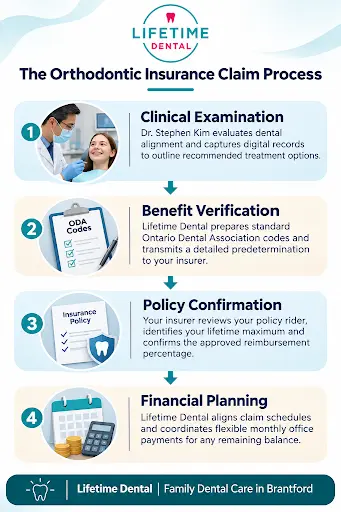
You confirm your orthodontic dental benefits by obtaining a formal predetermination from your dental provider and submitting it directly to your insurance company. A predetermination outlines the proposed treatment duration, the clinical diagnosis and the schedule of professional fees. Your insurance company replies with a detailed written statement showing their approved percentage, their lifetime maximum and any remaining out of pocket balance. Completing this step before treatment begins gives you a clear financial picture.

Questions to Ask Your Benefits Administrator

Contacting your human resources department or benefits provider directly clarifies ambiguities in your plan brochure. Having targeted questions prepared ensures you gather all relevant facts:

  • Does my policy include an orthodontic rider for adults and dependent children?
  • What is the copay percentage paid by the plan?
  • What is the lifetime maximum dollar allowance per patient?
  • Does the plan disburse payments in a lump sum or in monthly installments?
  • Is a waiting period required before orthodontic benefits become active?
The Predetermination Process at Lifetime Dental

Dr. Stephen Kim conducts a thorough clinical assessment using visual evaluations and diagnostic imagery to formulate your alignment strategy. Our administrative team prepares the predetermination paperwork and transmits it to your carrier on your behalf. Dalhousie University trained Dr. Stephen Kim brings over 30 years of clinical experience to patient care, ensuring all diagnostic records provide insurers with clear clinical documentation. Once your carrier returns the estimate, our team reviews the coverage figures with you to build a predictable financial plan.

What Can You Do if You Lack Orthodontic Coverage?

You can manage orthodontic care through staged office payment plans, personal Health Spending Accounts and medical expense tax credits if your insurance policy lacks orthodontic coverage. Many employers now provide Health Spending Accounts that allow staff members to allocate flexible pre tax dollars toward alignment treatments. Furthermore, the Canada Revenue Agency allows qualifying dental treatments, including braces, to be claimed as eligible medical expenses on your annual tax return.

Flexible Payment Arrangements

Lifetime Dental offers staged financial arrangements that divide treatment costs into manageable monthly installments over the course of your care. Spreading payments across your alignment timeline prevents large upfront expenses. Our Brantford office provides same day family scheduling and late Thursday hours until 7 PM to make appointments convenient for working parents and busy students.

Utilizing Health Spending Accounts

A Health Spending Account provides an excellent avenue to cover orthodontic fees using non taxed employment funds. If your primary insurance policy exhausts its lifetime maximum, you can submit the remaining receipts to your Health Spending Account for reimbursement. This strategy significantly lowers your direct financial burden.

Frequently Asked Questions

1. Does dental insurance cover braces for adults in Ontario?

Adult orthodontic coverage depends on your specific employer benefit package. While many workplace plans restrict orthodontic benefits to dependent children under 19, several policies offer adult riders. Lifetime Dental submits a predetermination to your insurer to confirm whether adult tooth alignment is included in your plan.

2. How does an orthodontic lifetime maximum work?

An orthodontic lifetime maximum is the total dollar sum an insurance policy will contribute toward tooth alignment for a patient. Unlike standard annual dental maximums, this cap does not reset each January. Once your claims reach this dollar limit, you pay the remaining balance out of pocket.

3. Will insurance pay for clear aligners the same as metal braces?

Most insurance carriers treat clear aligners and metal brackets equally under standard orthodontic benefit clauses. Benefits are determined by the clinical necessity of tooth movement rather than the appliance selected. Lifetime Dental bills using standard procedure codes so your eligible benefits apply smoothly.

4. What should I do if my insurance denies orthodontic coverage?

You can manage treatment costs using flexible office payment options, Health Spending Accounts or annual medical tax credits. Lifetime Dental works with Brantford families to structure predictable monthly payment arrangements that fit household budgets. We also provide virtual consultations to discuss treatment alternatives before you visit our clinic.

5. How do I find out how much my insurance will pay for braces?

You find out your exact coverage by having our office submit a detailed predetermination to your insurance carrier. The insurer sends back an explanation outlining their coverage percentage, eligible allowance and remaining patient responsibilities. Lifetime Dental walks you through this statement so you understand your finances before treatment begins.

Understanding your insurance benefits removes the stress from planning orthodontic treatment. Lifetime Dental provides family dental care designed around your comfort and schedule. Led by Dalhousie University trained Dr. Stephen Kim with over 30 years of clinical experience, our team explains every step of your care so you feel informed and relaxed. We offer same day family scheduling, late Thursday evening hours until 7 PM and prioritized emergency care to serve Brantford residents. Contact Lifetime Dental today to schedule your consultation and let our administrative team verify your orthodontic benefits.

Orthodontic Care Strategies and Practical Tips

What to Do When You Have a Dental Emergency in Brantford

How to Fix a Loose Dental Filling in Brantford
How to Fix a Loose Dental Filling in Brantford

If a loose dental filling has your tooth feeling rough, sensitive or sore, you probably want to know how to fix it fast. Here is what to do today and what happens next.

The honest answer is that a loose filling cannot be permanently fixed at home. You can protect the tooth for a short time. A dentist then removes the old filling, checks for decay and places a new one. At Lifetime Dental in Brantford, our dentists assess the tooth and explain your repair options clearly.

How Do You Fix a Loose Filling?

A loose filling needs a dentist to fix it properly. Until your visit, keep the area clean, chew on the other side and avoid sticky or hard foods. A pharmacy temporary filling kit can cover the tooth briefly. Your dentist will then repair or replace the filling.

What Is a Loose Dental Filling?

A loose dental filling is a filling that has started to separate from the tooth, leaving a small gap where bacteria and food can collect. It may wobble, feel raised or rough, or break away completely. Dentists in Brantford treat a loose filling as a problem to repair soon, though it is usually not a dental emergency.

How Can You Tell If Your Filling Is Loose?

A filling does not always fall out all at once. Watch for these signs:

  • A rough or sharp edge your tongue keeps finding
  • New sensitivity to hot, cold or sweet foods
  • Pain or pressure when you bite down
  • Food catching in the same spot after meals
  • A visible gap, dark line or hole around the filling
  • A small hard piece in your mouth while eating

What Causes a Filling to Come Loose?

Fillings are strong, though they do not last forever. Common causes include:

  • New decay around the edges. Bacteria can work under the filling and weaken its seal.
  • Normal wear over time. Older fillings can wear down or crack after years of chewing.
  • Hard foods. Ice, hard candy and popcorn kernels put sudden force on a filling.
  • Sticky foods. Caramels and toffee can pull at the edges of a filling.
  • Grinding or clenching. Steady pressure, often at night, can loosen fillings.
  • A cracked tooth. A crack can let a filling shift out of place.

Halloween candy and holiday treats are tough on older fillings. If your kids are trading caramels and hard candy this week, it is a good reminder for the whole family to chew with care.

How to Fix a Loose Dental Filling: What to Do Right Away

These steps protect your tooth until your appointment.

  • Call your dentist. Describe what happened and any pain you feel so the team can advise you on timing.
  • Save the piece if it comes out. Keep it in a clean container and bring it along. If the filling is still partly attached, leave it alone rather than pulling at it.
  • Rinse gently. A warm salt water rinse helps clear food from the area.
  • Chew on the other side. This takes pressure off the weakened tooth.
  • Keep brushing. Brush gently around the tooth and floss carefully so you do not catch the edge.
  • Cover the tooth if needed. Pharmacies sell temporary filling material and dental wax. Follow the package directions closely and treat it as a short term cover only.
  • Manage discomfort safely. Ask your pharmacist which pain reliever is right for you.

What Should You Avoid With a Loose Filling?

  • Do not use super glue or any household adhesive. These products are not safe for use in the mouth.
  • Do not try to force the filling back into place.
  • Avoid sticky, hard or very sugary foods until the tooth is repaired.
  • Do not wait for the pain to stop before booking. A tooth can feel fine while decay keeps spreading.

Is a Loose Filling a Dental Emergency?

In most cases, a loose filling is not an emergency. It still needs attention within the next few days. Call right away if you notice:

  • Severe or throbbing pain
  • Swelling in your face or gums
  • A fever along with tooth pain
  • A broken tooth with sharp or jagged pieces

For these situations, our emergency dentist in Brantford page explains how to reach us. Our guide on what to do in a dental emergency covers other urgent problems.

How Does a Dentist Fix a Loose Filling?

The repair depends on how many healthy teeth remain. At your visit, your dentist will usually:

  • Examine the tooth. This includes checking for decay or cracks, sometimes with dental imaging.
  • Remove the old filling. Any decay underneath is cleaned away.
  • Place a new filling. Tooth coloured materials are a common choice.
  • Recommend a stronger option if needed. If too much tooth is lost, an onlay or a dental crown may protect it better.
  • Treat the nerve if decay has reached it. In that case, a root canal may be part of the plan.

Our dentists use Microscope Assisted Dentistry, which gives a magnified view of the filling edges and any decay hiding underneath.

How Long Can You Wait With a Loose Filling?

It is best not to wait long. An exposed tooth can collect bacteria, develop new decay or crack under chewing pressure. Fixing a loose filling early often means a smaller repair. Waiting can turn a simple filling into a crown or root canal.

How Can You Help Your Fillings Last Longer?

A few daily habits make a real difference:

  • Brush twice a day and floss once a day.
  • Limit sticky and sugary snacks, especially between meals.
  • Avoid chewing ice, pens or fingernails.
  • Ask about a nightguard if you grind your teeth.
  • Keep up with regular checkups and professional cleanings.

Your dentist checks every filling at each visit. If your dental benefits renew in January, a checkup before year end is a good chance to catch worn fillings early.

Why Brantford Patients Trust Lifetime Dental for Filling Repairs

Lifetime Dental is led by Dr. Stephen Kim, who brings more than 30 years of experience and training from Dalhousie University. Our team of dentists offers general, restorative dentistry and emergency care under one roof. Families can book appointments on the same day, which makes busy schedules easier.

You will find us on Park Road North, just north of Highway 403. Patients visit from Holmedale, North Ward, West Brant.

Frequently Asked Questions

1. Can I fix a loose filling at home?

No, a loose filling needs a dentist to repair it properly. A pharmacy temporary filling kit or dental wax can protect the tooth for a short time. Book a dental visit as soon as you can.

2. Can I use super glue on a loose filling?

No, super glue and other household adhesives are not safe to use in your mouth. They can irritate your gums and make the repair harder. Use a pharmacy temporary filling product instead and call your dentist.

3. Is a loose filling a dental emergency?

A loose filling is usually not an emergency, though it should be checked within a few days. Call right away if you have severe pain, swelling or a fever. These signs may point to infection.

4. What happens if I swallow my filling?

A swallowed filling is usually small enough to pass without harm. Let your dentist know at your appointment. The tooth still needs a new filling to protect it.

5. How much does it cost to replace a loose filling?

The cost depends on the tooth, the size of the filling, the material used and your insurance coverage. If extra treatment is needed, such as a crown, the cost will be higher. Our team can give you an estimate after an exam.

A loose filling is easier to fix when it is caught early. Call Lifetime Dental at 519-759-7630 or email greatsmiles@lifetimedentalbrantford.ca to book a visit with our team. If you are in pain right now, visit our emergency dentist in Brantford page to learn how we can help.

How to Deal With Dental Anxiety in Brantford: A Practical Guide
How to Deal With Dental Anxiety in Brantford: A Practical Guide

Your stomach knots up, your palms get sweaty and the appointment keeps getting pushed back. Many people feel nervous before a dental visit and there are practical ways to make that feeling smaller.

If you want to know how to deal with dental anxiety, a few small, realistic steps can change how a visit feels. The short answer is to name your specific fear first, then match it to a plan that fits. This guide is for Brantford, ON patients who have been putting off a visit. It covers what to do before, during and after your appointment and what to look for in a dental team. It also shows how Lifetime Dental approaches comfort.

Quick Answer: What Should I Do?

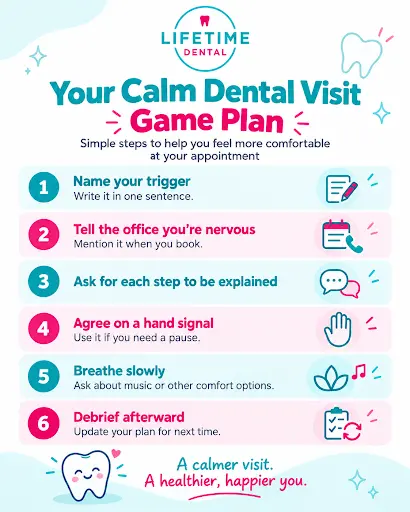
  • Tell the office you're nervous when you book.
  • Ask for each step to be explained.
  • Agree on a hand signal to pause.
  • Breathe slowly and bring music.
  • Choose a time of day that feels calmer.

What is Dental Anxiety?

Dental anxiety is a feeling of fear, worry or tension about visiting the dentist or having dental treatment. When the fear becomes strong enough that a person avoids care altogether, it is often called dental phobia. In Brantford, Ontario, patients who feel this way can ask any local dental office how it supports nervous patients.

Where Do I Start When I Don't Know How to Deal with Dental Anxiety?

Start by naming exactly what you are afraid of. Dental anxiety is a broad label and the best fix depends on the trigger. Someone who dreads needles needs a different plan from someone who hates not being able to speak.

Common Triggers To Look For

  • Pain or needles, including the freezing
  • Feeling out of control while lying back in the chair
  • The sounds, smells or vibrations of dental tools
  • Embarrassment about the state of your teeth or how long it has been
  • A difficult experience in the past

Turn Your Trigger Into a Short Note

Before you call, write one or two sentences about what bothers you most. For example: "Needles make me tense and I feel better when I know what is coming." Or: "It has been years since my last visit and I feel embarrassed about it."

Keep it plain and short. A note like this gives you words to use when the nerves hit. It also gives the dental team something concrete to work with.

Should I Tell My Dental Team That I'm Nervous?

Yes. Telling the team when you book is one of the simplest ways to make a visit easier, because it lets them plan around you instead of guessing. A good dental team will want to know.

What To Say When You Call

Mention it near the start of the call. You could say, "I get nervous at the dentist and I would like someone to talk me through things." Share your trigger note and ask how the office looks after nervous patients. Pay attention to the answer. A calm, unhurried reply is a good sign.

Ask For Each Step To Be Explained

Feeling worse when you can't see what's coming is very common. Ask the dentist to tell you what is about to happen before it happens and what you are likely to feel. Lifetime Dental says on its website that the team explains every step and answers your questions. Whichever office you choose, it is worth asking whether they work this way.

Agree on a Hand Signal

Before treatment starts, agree on a simple signal, such as raising your left hand, that means "pause." Knowing you can stop at any time can make it easier to keep going. Most people find they use the signal less than they expected, but having it matters.

How Can I Stay Calm While I'm in the Chair?

Slow your breathing, give your mind something else to do and, if the office allows it, bring someone you trust. These are small tools and they work best when you have practised them before the visit.

Use Slow Breathing

Breathe in gently through your nose, then out even more slowly through your mouth. Longer exhales can help your body settle. Try it at home for a few minutes a day so it feels familiar when you need it.

Give Your Mind Something Else To Do

Ask the office whether you can listen to music or a podcast through headphones. You can also choose a mental task that takes a little focus, like counting backwards by sevens or planning a week of dinners. The goal is to give your attention somewhere else to go.

Bring a Support Person

Ask whether a friend or family member can come along, even if they only wait in the reception area. Having someone to talk to before and after can take the edge off. Offices differ in what they allow, so ask when you book.

What Can I Do Before my Appointment to Feel Calmer?

Build a few easy habits into the day or two before your visit. You may not get rid of every nerve, but you can avoid adding extra stress.

Pick Your Time of Day

Choose the slot when you usually feel most settled. If mornings leave you rushed, book later in the day. If waiting around all day makes you more anxious, book the first appointment you can.

Leave Room in Your Schedule

Rushing makes nerves worse. Lifetime Dental's first appointment takes approximately 60 minutes, so plan some buffer before and after. Avoid scheduling a tight meeting right afterward.

Look After the Basics

Get a decent night's sleep and follow any instructions the office gives you about eating beforehand. If caffeine makes you jittery, go easy on it that day. Arrive a few minutes early so you aren't rushing, but not so early that you sit and stew.

What If I'm Afraid of Needles or Pain?

Tell the team that this is your main worry, then ask what they do to keep you comfortable. Lifetime Dental's website mentions pain-free freezing techniques, so it is a good topic for your first conversation.

Questions Worth Asking About Freezing

  • What will I feel and when?
  • Can you tell me before each step?
  • How will I let you know if something doesn't feel right?
  • What can we change if I'm still uncomfortable?

Asking these out loud often turns a vague dread into a few clear answers. It also shows the team exactly where you need extra care.

What If I'm Embarrassed About My Teeth Or How Long It Has Been?

Say so at the start. Your dentist's job is to help you move forward, not to judge how you got here.

Rehearse With a Virtual Consultation

Here is a step that is easy to overlook: meet the team before you sit in the chair.

Lifetime Dental offers a Virtual Dental Consultation, so you can talk from home, where you already feel at ease. Use that conversation to share your trigger note and ask how your first visit will go. Walking in for the first time already knowing a friendly voice can lower the stakes.

How Do I Make The Next Visit Easier?

Debrief soon after the visit, while it is fresh, then adjust your plan. Each appointment tells you something about what helped.

Write a Short Debrief

On your phone or on paper, jot down what went better than expected, what was still hard and what you would like done differently. A few lines is plenty.

Keep a One-Page Comfort Plan

Put your trigger, your pause signal, your breathing method and your favourite questions in one place. Share it with the team before your next visit. Update it each time you learn something new about what works for you.

Celebrate The Win

Plan something small afterward, like a coffee or a walk. Going when you were nervous took effort and it is worth marking.

What Should I Look for in a Dental Office If I'm Anxious?

Look for a team that explains what they are doing, answers your questions and makes sure you are relaxed before they start. Those are the things Lifetime Dental says it does. You can read more about comfort-first dental care at Lifetime Dental, including Dr. Stephen Kim's more than 30 years of experience.

Use this short checklist when you compare offices:

  • Do they listen when you explain your fears?
  • Will they walk you through each step?
  • Do they welcome questions?
  • Can you pause treatment whenever you need to?
  • Can you talk to them before your first visit?

Frequently Asked Questions

1. How do I deal with dental anxiety before my first visit?

Start by writing down what worries you most, then tell the office when you book. Plan a relaxed schedule so you are not rushing and practise slow breathing at home. Lifetime Dental also offers a Virtual Dental Consultation if you would like to talk first.

2. Can I ask my dentist to explain every step?

Yes and you should. At Lifetime Dental, the team explains every step and answers your questions. If you want more detail or a slower pace, say so at the start.

3. What if I need to stop during treatment?

Agree on a simple hand signal, like raising your hand, with your dentist before treatment begins. It gives you a clear way to ask for a pause. Mention it at the start so everyone is on the same page.

4. Does Lifetime Dental use pain-free freezing techniques?

Lifetime Dental's website describes pain-free freezing techniques as part of its approach to comfort. Everyone's experience is different, so ask the team what to expect. Tell them if needles are your main worry.

5. Can I talk to the team before I come in?

Yes. Lifetime Dental offers a Virtual Dental Consultation, so you can ask questions from home before your first visit. You can also call the office at +1 519-759-7630.

6. How long is the first appointment at Lifetime Dental?

The first appointment is approximately 60 minutes. Plan some buffers on either side so you are not rushing. For questions about cost, book a consultation with the team.

Ready for a Calmer Dental Visit?

You do not have to feel brave to take the first step. You only have to start the conversation. Call Lifetime Dental at +1 519-759-7630, choose Book an Appointment or begin with a Virtual Dental Consultation. You can also reach out to the Lifetime Dental team in Brantford and tell them what would help you feel at ease.

How Long After Dental Cleaning Can I Eat? A Brantford Guide

How Long After Dental Cleaning Can I Eat? A Brantford Guide

You leave the dental chair with smooth, fresh teeth and a growling stomach. Is it safe to head straight to lunch?
For most people, yes. Fluoride or freezing can add a short wait, so the type of cleaning you had makes the difference.
This guide explains why the wait changes from visit to visit, which foods feel gentlest, what can stain freshly cleaned teeth and how to plan your appointment around your meals here in Brantford.

Quick Answer: When Can I Eat After a Dental Cleaning?

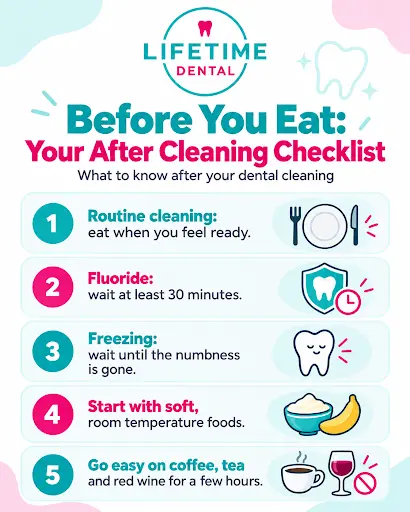
  • Routine cleaning without fluoride: you can usually eat right away.
  • Cleaning with fluoride: wait at least 30 minutes before eating or drinking.
  • Deep cleaning with freezing: wait until the numbness is completely gone.
  • Your first meal: choose soft, mild, room temperature foods for the first few hours.
  • Staining: go easy on coffee, tea, red wine and smoking for a few hours.
  • Your own instructions: always follow what your hygienist tells you at the end of your visit.

A dental cleaning is a preventive appointment in which a dental hygienist removes plaque and tartar from your teeth and then polishes them. At Lifetime Dental in Brantford, Ontario, professional teeth cleaning is a core part of our preventive care. Aftercare is the guidance you receive at the end of the visit, including when you can eat and drink again.

How Long After Dental Cleaning Can I Eat After a Routine Visit?

After a routine cleaning without fluoride, there is usually no need to wait. Removing tartar and polishing your teeth does not leave anything behind that food could disturb. You can enjoy a meal or a drink as soon as you feel comfortable.

Why the Wait Is Not the Same for Every Visit

A cleaning is not always the same appointment. Some visits involve only removing buildup and polishing. Others add a fluoride treatment or freezing for a deeper cleaning. Each extra step changes what is comfortable to eat and when, which is why the type of visit matters more than any single number.

What Your Mouth May Feel Like Afterward

Your teeth will likely feel smooth and clean. Some people notice that their gums feel a little tender or that their teeth react more to hot and cold, especially if there was a lot of tartar to remove or the gums were already irritated. These feelings usually settle within a day. If anything feels more than mildly uncomfortable, let your dental team know.

How Long Should I Wait to Eat After Fluoride Treatment?

If fluoride was part of your visit, a common guideline is to wait at least 30 minutes before eating or drinking. This short pause is worth following, even if you are hungry.

Why Fluoride Needs Time to Work

Fluoride helps strengthen your enamel by staying in contact with the surface of your teeth. Eating or drinking too soon can rinse it away before it has done its job. Waiting gives the fluoride time to work, which is the reason it was applied in the first place.

Fluoride Varnish Can Come With Different Instructions

Fluoride comes in more than one form. Some offices use a gel or foam, while others paint on a varnish that stays on the teeth for longer. Varnish often comes with its own instructions about hot drinks, hard foods and brushing for the rest of the day. Ask your hygienist which type you received and how long each instruction applies.

A Simple Habit That Helps

Check the time as you leave the chair and set a reminder on your phone for when your wait ends. It takes ten seconds and removes the guesswork when you are hungry and running errands. Remember that drinks count too. A coffee on the drive home can break the wait just as a snack would.

How Long Should I Wait to Eat After a Deep Cleaning?

A deep cleaning, also called scaling and root planing, cleans below the gumline to treat gum disease. It often involves freezing, which changes your aftercare.

If Your Mouth Was Frozen

Wait until the numbness in your lips, cheeks and tongue has completely worn off before you eat. When you cannot feel these areas, it is easy to bite them without noticing or to burn your mouth on a hot drink. Freezing can take a few hours to wear off, so plan a soft meal for later in the day.

If Your Gums Feel Sore

Tender gums can make chewing less pleasant for a day or two. Soft foods help during this time. If soreness lasts or gets worse, contact your dental team rather than waiting it out. They know what is normal after the work they did.

Can I Drink Coffee or Tea After a Dental Cleaning?

After a routine cleaning without fluoride, you can. Polishing removes surface stains. Many dental professionals suggest limiting dark drinks for a few hours afterward to help your teeth stay bright. If fluoride was applied, wait the full 30 minutes before any drink.

Foods and Drinks That Can Stain After a Cleaning

For the first few hours, consider going easy on:

  • Coffee and black tea
  • Red wine
  • Cola and other dark pop
  • Berries
  • Tomato sauce
  • Soy sauce and curry
  • Smoking or vaping, which can also irritate freshly cleaned gums

If you do have a dark drink, rinse your mouth with water afterward. A straw can also help keep iced coffee or tea away from your front teeth.

What Should I Eat First After a Dental Cleaning?

Soft, mild foods served at room temperature are the easiest choice for the first few hours, especially if your teeth or gums feel sensitive.

Gentle Options to Consider

  • Yogurt or a smoothie eaten with a spoon
  • Scrambled eggs
  • Oatmeal
  • Mashed potatoes
  • Bananas or applesauce
  • Soup that is warm rather than hot
  • Cooked vegetables
  • Soft bread or mild cheese

These foods ask very little of your teeth and gums. They also make it easy to eat slowly and notice if any area feels tender.

Foods and Drinks to Approach With Care

  • Very hot or very cold items, which can bother teeth that feel sensitive
  • Acidic foods and drinks such as citrus fruits, tomatoes, vinegar dressings and pop, which can irritate freshly cleaned gums
  • Spicy dishes, which can sting tender gum tissue
  • Hard or crunchy snacks such as nuts, chips, hard candy and raw vegetables
  • Sticky or chewy foods such as caramel and dried fruit, which cling to teeth and tire sore gums

You do not need to avoid these for long. Most people choose a softer first meal and return to their usual diet once their mouth feels normal.

Can I Drink Water and Brush My Teeth After a Cleaning?

Drinking Water

After a routine cleaning, you can drink water right away. It keeps your mouth rinsed and comfortable. If fluoride was applied, ask whether water counts as part of your wait.

Brushing Your Teeth

If you did not have fluoride, carry on with your normal brushing and flossing routine that evening. If fluoride was applied, ask your hygienist when you can brush. Varnish instructions often ask you to wait several hours so the fluoride can stay on your teeth.

Can I Plan My Cleaning Around Mealtimes?

Yes. Mentioning your mealtimes when you book helps you avoid leaving your appointment hungry with a wait ahead of you.

Ways to Fit the Wait Into Your Day

  • Book an appointment before your usual mealtime, so any wait passes while you travel or work.
  • Have a meal or snack beforehand if you can, then brush before your visit.
  • Avoid scheduling a business lunch or family dinner right after a deep cleaning with freezing.
  • Pack a soft snack for when your wait ends, especially if you have a long drive.

If you would like to plan a visit, you can read about professional teeth cleaning and ask our team which appointment times are open.

How to Keep Your Teeth Clean Between Visits

A professional cleaning removes the buildup that brushing and flossing cannot always reach. Good habits at home help that fresh feeling last:

  • Brush twice a day for two minutes with fluoride toothpaste.
  • Floss once a day to clean between your teeth.
  • Drink water throughout the day, especially after meals.
  • Limit sugary snacks and drinks between meals.
  • Keep up with regular cleanings. Many patients visit every six months, though your dental team may suggest a different schedule based on your needs.

Learn more about how we help families stay on track with family preventive dentistry in Brantford.

Who Can Tell Me My Exact Wait Time in Brantford?

The guidance above covers most cleanings. Your own hygienist is still the best source for your visit, because they know exactly what was done. Ask before you leave the chair.

Questions to Ask Before You Leave

  1. Did I have fluoride today? Was it a gel, foam or varnish?
  2. When can I eat and drink again?
  3. When can I brush my teeth?
  4. Are there foods or drinks I should avoid? For how long?
  5. When should I come back for my next cleaning?

Write the answers down or ask for them in writing if that is easier. This guide is general information and does not replace the instructions from the dental team that treated you.

Frequently Asked Questions

1. Is it okay to eat immediately after dental cleaning?

Yes, in most cases. If your visit was a routine cleaning with no fluoride or freezing, there is nothing to wait for. If you are not sure what was included in your visit, ask the Lifetime Dental front desk before you leave.

2. What if I ate too soon after fluoride treatment?

Do not worry. Eating early will not harm your teeth. It may simply mean the fluoride had less time to work. You usually do not need a repeat treatment. Mention it at your next visit if you would like advice.

3. Is it normal for my gums to bleed after a dental cleaning?

A little bleeding during or right after a cleaning is common, especially if your gums were already irritated. It usually stops within a day. If bleeding continues for several days or your gums bleed every time you brush, call Lifetime Dental at 519-759-7630. Ongoing bleeding can be an early sign of gum disease.

4. Can I chew gum after a dental cleaning?

Sugar free gum is fine after a routine cleaning. If fluoride was applied, wait until your fluoride wait is over. After a deep cleaning with freezing, wait until the numbness is gone so you do not bite your cheek or tongue.

5. Does Lifetime Dental direct bill insurance for teeth cleanings?

Yes. Lifetime Dental can directly bill many insurance providers. Our team can also help you understand your coverage before your appointment. Please bring your insurance details to your visit.

6. Can my whole family book cleanings on the same day?

Yes. Lifetime Dental offers same day family scheduling so parents and children can have their cleanings in one trip to our Brantford office. Mention it when you call and we will look for back to back appointment times.

7. Do I need to be a current patient to book a cleaning in Brantford?

No. Lifetime Dental is accepting new patients of all ages. You do not need a referral to book your first cleaning.

Ready to Book Your Next Cleaning in Brantford?

A fresh, clean smile is easier to enjoy when you know what to expect afterward. Our team at Lifetime Dental will walk you through your aftercare before you leave, including when you can eat and drink again. Book an appointment online or call us at 519-759-7630. New to our practice? Visit our new patients page to see what your first visit looks like.

What Is a Dental Crown? What to Expect During Treatment in Brantford

What Is a Dental Crown? What to Expect During Treatment in Brantford

What is a dental crown and what should you expect when your dentist in Brantford recommends one? Knowing each step ahead of time can make your visit feel far more comfortable.

A dental crown is a cap shaped like a natural tooth that fits over a damaged or weakened tooth to restore its strength, shape and appearance. Treatment usually takes two visits, one to prepare the tooth and one to place the finished crown. At Lifetime Dental in Brantford, Dr. Stephen Kim and our team explain every step so you always know what comes next.

What Should You Know About Dental Crowns?

A dental crown is a custom cap that covers a damaged, decayed or weakened tooth. Getting a crown usually takes two visits. Your tooth is frozen, shaped and fitted with a temporary crown, then the permanent crown is placed at your second appointment.

What Is a Dental Crown?

A dental crown, often called a dental cap, is a restoration that covers the entire visible part of a tooth above the gumline. It is made to match the size, shape and colour of your natural teeth so it blends in with your smile. For patients in Brantford and across nearby areas, crowns are one of the most common ways to protect a tooth that a filling alone can no longer support.

You may hear people say dental tooth crown or dental cap crown. These all describe the same treatment: a protective cover that lets you keep and use your natural tooth.

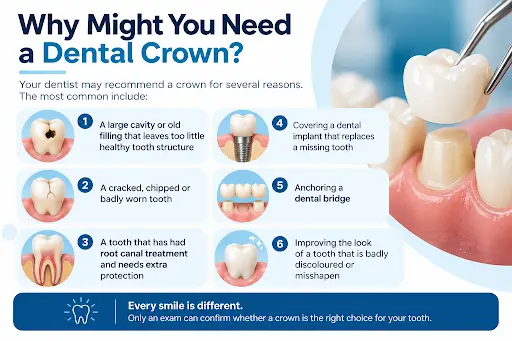
Why Might You Need a Dental Crown?

Your dentist may recommend a crown for several reasons. The most common include:

  1. A large cavity or old filling that leaves too little healthy tooth structure
  2. A cracked, chipped or badly worn tooth
  3. A tooth that has had root canal treatment and needs extra protection
  4. Covering a dental implant that replaces a missing tooth
  5. Anchoring a dental bridge
  6. Improving the look of a tooth that is badly discoloured or misshapen

Every smile is different. Only an exam can confirm whether a crown is the right choice for your tooth.

What Are the Benefits of a Dental Crown?

A well fitted crown can make a real difference to how your tooth feels and works. Benefits include:

  1. Restoring comfortable chewing and biting
  2. Protecting a weakened or cracked tooth from breaking further
  3. Helping you keep a natural tooth that might otherwise need to be removed
  4. Improving the shape and colour of a damaged tooth
  5. Supporting a dental bridge or covering a dental implant

Can Children Get Dental Crowns?

Yes, in some cases. A baby tooth with a large cavity may be crowned to protect it and hold space until the adult tooth comes in. Our team will explain whether a crown is the right choice for your child after an exam.

What Types of Dental Crowns Are There?

Dental crowns come in several materials. Each one has its own strengths.

Material Appearance Often Used For Things to Know
All ceramic or porcelain Natural, tooth coloured Front teeth and visible areas Can chip under heavy biting force
Zirconia Tooth coloured Back teeth and strong bites Very strong; look varies by type
Porcelain fused to metal Tooth coloured outer layer Front or back teeth A thin dark line may show near the gumline over time
Gold or metal alloy Metallic Back molars Very durable but less natural looking

Dr. Kim will talk with you about which material suits your tooth, your bite and your budget.

What to Expect When Getting a Crown: Your Visits Step-by-Step

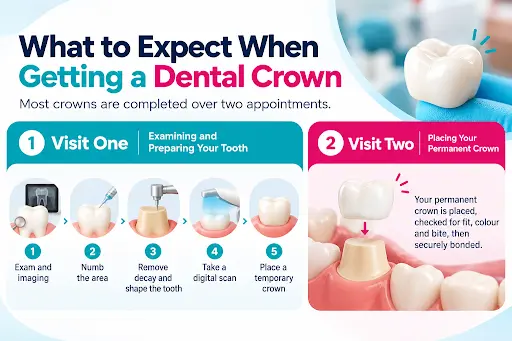
Most crowns are completed over two appointments. Here is what each visit typically involves.

Visit One: Examining and Preparing Your Tooth

  • Exam and imaging. Dr. Kim checks the tooth, the surrounding gums and the roots to make sure a crown is the right fit.
  • Freezing the area. A local anaesthetic numbs the tooth and nearby gums so you stay comfortable.
  • Shaping the tooth. Any decay is removed and the tooth is gently reshaped so the crown can fit over it. Our practice uses Microscope Assisted Dentistry, which gives a magnified view of the tooth during this step.
  • Taking an impression. An impression or digital scan records the exact shape of your tooth and bite for the dental lab.
  • Placing a temporary crown. A temporary crown protects your tooth while your permanent one is made.

Visit Two: Placing Your Permanent Crown

Your permanent crown usually arrives from the lab within a few weeks. At this visit, the temporary crown is removed. Dr. Kim then checks the fit, colour and bite of the new crown before bonding it securely in place. Some teeth need extra steps first, such as a root canal or a core buildup and your treatment plan will explain these clearly.

Does Getting a Dental Crown Hurt?

Most patients feel pressure rather than pain during treatment because the area is fully frozen. After the freezing wears off, it is common to notice some gum tenderness or mild sensitivity to hot and cold for a few days. Ask our team which comfort measures are right for you.

Call us if discomfort lasts longer than expected, if your bite feels high or if you notice swelling. If a temporary crown comes off or a tooth suddenly hurts, our emergency dentist in Brantford page explains how to reach us quickly.

How Much Does a Dental Crown Cost in Ontario?

There is no single price for a crown. How much a dental crown costs depends on several factors:

  • The material you choose
  • Which tooth needs the crown
  • Whether you need other treatment first, such as a root canal
  • Your insurance coverage

The Ontario Dental Association publishes a suggested fee guide that many Ontario dentists refer to, although actual fees vary from clinic to clinic. Many private dental plans cover part of major restorative work like crowns. If you are enrolled in the Canadian Dental Care Plan, our team can help you understand what your coverage may include.

With autumn underway in Brantford, now is a good time to check when your benefits renew. Crowns usually take two visits, so booking in October or November can leave time to finish treatment before your plan year ends, if your coverage works that way.

Are There Any Downsides to a Tooth Crown?

Crowns are a reliable treatment and they come with a few trade offs worth knowing:

  • Some natural tooth structure must be removed and this cannot be reversed.
  • Temporary sensitivity is common after treatment.
  • Porcelain crowns can chip if you bite down on very hard objects.
  • A crown can loosen over time and may need to be reattached or replaced.
  • The tooth underneath can still develop decay along the crown's edge.

How Do You Care for a Dental Crown?

Dental crowns need the same daily care as your natural teeth. To help your crown last:

  • Brush twice a day and floss daily, paying close attention to the gumline around the crown.
  • Avoid chewing ice, hard candy, pens or fingernails.
  • Ask about a nightguard if you clench or grind your teeth.
  • Keep up with regular checkups and professional cleanings.

With good home care and regular visits, a crown can serve you well for many years.

What Should You Do If Your Crown Comes Loose or Falls Out?

A loose or lost crown is not usually an emergency, though it should be looked at soon. If this happens:

  • Keep the crown in a clean, safe container and bring it with you.
  • Call Lifetime Dental as soon as you can.
  • Avoid chewing on that side of your mouth.
  • Do not try to reattach it with household glue.

Our guide on what to do in a dental emergency explains how to reach us quickly.

Dental Crown or Veneer: What Is the Difference?

A crown covers the entire tooth, while a veneer is a thin shell bonded only to the front surface. Crowns are better suited to teeth that are weakened, cracked or heavily filled. Veneers are mainly a cosmetic option for healthy teeth that need a change in shape or colour. Learn more about your options on our cosmetic dentistry page.

Why Brantford Families Choose Lifetime Dental for Crowns

Dr. Stephen Kim brings more than 30 years of experience and training from Dalhousie University to every restoration. Our Microscope Assisted Dentistry supports careful, precise preparation of each tooth. Families can often book same day appointments together, which makes busy schedules easier to manage.

Whether you live in Brantford, you will find general, restorative dentistry and emergency care all under one roof. Our team is also proud to support the Brant Community Foundation and the Brant Community Healthcare Systems Foundation.

Frequently Asked Questions

1. Is getting a dental crown painful?

Most patients feel only pressure because the tooth and gums are frozen with local anaesthetic. Some mild tenderness or sensitivity is common for a few days afterward. Contact your dentist if discomfort does not ease.

2. What is the average cost of a tooth crown in Ontario?

Crown costs in Ontario vary with the material, the tooth involved, any treatment needed first and your insurance. Many dentists refer to the Ontario Dental Association suggested fee guide. Your dental office can give you an estimate after an exam.

3. How long does a crown procedure usually take?

A traditional crown usually takes two appointments a few weeks apart. The first visit prepares the tooth and places a temporary crown. The second visit fits and bonds the permanent crown.

4. What is the downside of a tooth crown?

Getting a crown requires removing some natural tooth structure, which cannot be undone. Porcelain can chip and a crown may loosen over time. The tooth underneath can still develop decay, so daily care and regular checkups matter.

5. How long does a dental crown last?

How long a crown lasts depends on the material, your bite, your habits and how well you care for it. With good home care and regular dental visits, many crowns last for years. Your dentist can check your crown at every visit.

What to Expect at Your First Visit to a Dental Clinic in Brantford

What to Expect at Your First Visit to a Dental Clinic in Brantford

Starting with a new dentist can feel like a big step, especially if it has been a while since your last checkup. Knowing what happens before you walk in the door makes the whole visit easier.

What Should I Expect at My First Visit to a Dental Clinic in Brantford?

A first visit to a dental clinic in Brantford usually takes 60 to 90 minutes and includes a health history review, an oral exam, X-rays if needed and a conversation about your treatment plan. Cleanings are sometimes done the same day.

How Long Does a First Visit to a Dental Clinic in Brantford Take?

Most new patient appointments run between 60 and 90 minutes. This gives your dentist enough time to review your health history, examine your teeth and gums and answer any questions before recommending next steps. If you are coming from outside Brantford, whether from Paris, Brant County or Six Nations, it is worth planning for the full appointment window plus travel time.

What Happens During a New Patient Exam?

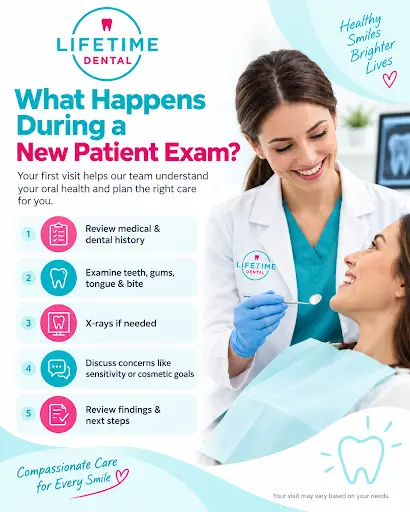
Your first appointment at Lifetime Dental typically includes a few key parts. Your dentist and hygienist want a full picture of your oral health before recommending any treatment.

  1. A review of your medical and dental history, including any medications or conditions that affect your care
  2. A visual exam of your teeth, gums, tongue and bite
  3. X-rays, if your dentist determines they are needed and none are on file
  4. A discussion of any concerns you have, from sensitivity to cosmetic questions
  5. A summary of findings and if needed, a plan for future appointments

Every practice runs this a little differently, so what happens at your Brantford dental clinic may vary slightly depending on your specific needs.

What Should I Bring to My First Appointment?

A little preparation goes a long way toward a smooth first visit.

  • Photo identification and your dental insurance details, if applicable
  • A list of current medications or supplements
  • Records or X-rays from a previous dentist, if you have recently moved to the Brantford area
  • Any questions you want to ask about your oral health or a specific concern

New patients relocating to growing areas like West Brant often do not have recent records on hand and that is completely normal. Your dentist can still complete a thorough exam without them.

Will I Get Cleaning on My First Visit?

A dental cleaning is not always part of the first appointment. Some patients receive a cleaning the same day, while others are scheduled for a separate hygiene appointment once the exam is complete. What to expect at a dental cleaning generally includes removal of plaque and tartar, polishing and a review of your brushing and flossing habits. Your dentist will let you know during your exam what to expect at dental cleaning for your specific situation, since it depends on your oral health and how much time is available.

A first visit to a dental clinic in Brantford is designed to build a complete picture of your oral health before any treatment begins, not to rush through a single procedure.

What to Expect After Your First Visit

Once your exam is finished, your dentist will walk you through what they found and outline any recommended next steps. This might mean booking a cleaning, scheduling restorative work or simply confirming that everything looks healthy and setting a date for your next checkup. Families in Brantford often use this first visit to establish a long term dental home for everyone, not just book a single appointment.

New Patient Questions About Visiting a Brantford Dental Clinic

1. What should I not do before seeing a dentist?

There is no need to change your routine before your appointment. Brush and floss as usual and eat normally beforehand unless your dentist has given you specific instructions.

2. What can a dentist tell by looking in your mouth?

A visual exam can reveal signs of cavities, gum disease, wear from grinding and other oral health concerns. It also helps your dentist understand your overall dental history and habits.

3. Should I brush my teeth before a dentist visit?

Yes, brushing normally before your appointment is fine and encouraged. There is no need for extra brushing or special preparation.

4. How do I prepare for my first dental visit?

Bring identification, insurance information, a list of medications and any previous dental records you have. Arriving a few minutes early to complete new patient paperwork also helps the visit run smoothly.

5. What happens at a dental checkup after the first visit?

Follow up checkups are typically shorter than a first visit and focus on cleaning, monitoring any ongoing concerns and catching new issues early.

If you are ready to find a dental home in Brantford, book your first visit with Lifetime Dental and see how straightforward a new patient appointment can be. Call 519-759-7630 or visit our Dental Services page to learn more about what we offer beyond your first checkup.