Knowing what to do when you have a dental emergency in Brantford can turn a frightening moment into a manageable one. Whether it is sudden pain, a chipped tooth or an injury during a weekend hockey game, having a clear plan helps you protect your smile and get the right care quickly.
What Should You Do During a Dental Emergency?
Call your dentist right away and describe your symptoms. For severe bleeding, facial swelling that affects breathing or a jaw injury, go to the emergency room first, then follow up with your dentist as soon as possible.
What Counts as a Dental Emergency?
Not every dental problem needs same day attention, but some situations should never wait. A true dental emergency generally involves one of the following:
- Severe or worsening tooth pain
- A knocked out or partially dislodged tooth
- A cracked, broken or badly chipped tooth
- A dental abscess, which appears as swelling near the face or jaw
- Uncontrolled bleeding from the mouth
- A lost filling or crown causing pain or sharp edges
- An injury to the jaw, lips or soft tissue
If you are unsure whether your situation qualifies, calling your dental office is still the safest first step. A quick phone call can help you decide whether you need to be seen that day or can wait for a regular appointment.
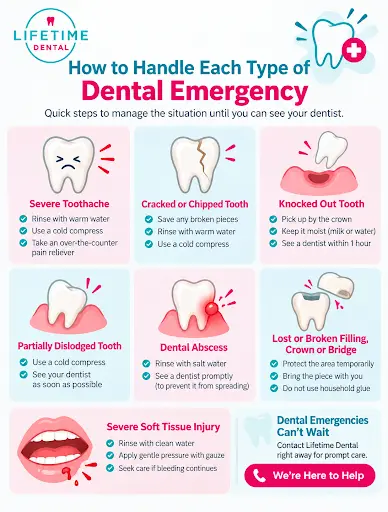
How to Handle Each Type of Dental Emergency
The right first step depends on what kind of emergency you are dealing with. Here is what to do while you wait to see your dentist.
Severe Toothache.
Rinse your mouth thoroughly with warm water and use floss to check for lodged food. Apply a cold compress to the outside of your cheek if there is swelling and use an over the counter pain reliever such as acetaminophen or ibuprofen. Never place aspirin directly against your gum or tooth, as it can burn the tissue.
Badly Cracked or Chipped Tooth.
Save any broken pieces and rinse your mouth with warm water. If there is bleeding, press a piece of clean gauze to the area for about ten minutes. A cold compress on the cheek near the affected tooth helps control swelling and discomfort.
Knocked Out Tooth.
Pick the tooth up by the crown, never the root and rinse it gently with water without scrubbing it. If possible, try placing it back into its socket facing the correct direction without forcing it. If that is not possible, keep the tooth moist in milk or, if milk is not available, in water with a small amount of salt. Reaching your dentist within an hour gives the tooth the best chance of being saved.
Partially Dislodged Tooth.
Apply a cold compress to the outside of your cheek to manage pain and see your dentist as soon as possible, since a loosened tooth still needs to be repositioned and stabilized professionally.
Dental Abscess.
An abscess is a swollen, infected area near the root of a tooth or between the tooth and gum. It should be seen promptly, since it can spread and affect surrounding tissue. A mild salt water rinse, about half a teaspoon of salt in a cup of warm water, can ease discomfort while you wait for your appointment.
Lost or Broken Filling, Crown or Bridge.
If a filling is missing, sugarless gum or an over the counter dental cement can temporarily protect the area until you are seen. If a crown or bridge comes loose, bring it with you to your appointment and, if it can be placed back over the tooth, coat the inside with denture adhesive or dental cement rather than household glue.
Severe Soft Tissue Injury.
For cuts or bleeding involving the lips, cheeks, gums or tongue, rinse with a mild salt water solution and apply pressure with clean, moistened gauze for fifteen to twenty minutes. If bleeding does not slow down, seek care right away.
What Is Not a Dental Emergency?
Some dental issues are uncomfortable but can usually wait for a regular appointment rather than urgent care. These include a mild or dull toothache, a small chip that is not causing pain, broken braces without bleeding, an object stuck between the teeth or a minor soft tissue cut. For a dull ache, rinsing with warm water and flossing to check for trapped food is often enough relief until your visit. A sharp edge from a small chip or a poking wire can be covered temporarily with orthodontic wax from most pharmacies. An object caught between teeth is best removed gently with floss rather than a sharp tool. If pain or bleeding increases at any point, it is worth calling your dentist sooner rather than waiting.
Can You Go to the Emergency Room for a Toothache?
Hospital emergency rooms in Ontario can treat some dental related issues, but their role is limited. Emergency room physicians can help with severe swelling, facial injuries or infections that pose a broader health risk and they can prescribe pain relief or antibiotics when appropriate. However, hospitals generally do not perform extractions, fillings or other restorative dental work, so a dentist is still needed to treat the underlying problem. For pain that is dental in nature without signs of a medical emergency, contacting a dentist directly is usually the faster and more effective route.
Is a Dental Emergency Covered by Insurance or CDCP?
Coverage for emergency dental care depends on your specific plan. Many private insurance policies include some coverage for urgent treatment such as extractions or emergency exams, though the details vary by provider. Patients enrolled in the Canadian Dental Care Plan may have coverage for certain emergency services as well, depending on their eligibility and renewal status. Because every plan is different, it is best to confirm your specific coverage with your insurer or with our team before your visit whenever your situation allows time to do so.
What to Do for a Dental Emergency on a Weekend or After Hours
Dental emergencies rarely wait for convenient office hours. If your regular dentist is closed, look for a local emergency dental option, call and leave a message describing your situation or visit an emergency room if you have symptoms like uncontrolled bleeding, difficulty breathing or swallowing or facial swelling that is spreading. Once the immediate danger has passed, book a follow up appointment with your dentist as soon as offices reopen so the root cause can be properly treated.
When to Call Lifetime Dental
Brantford families trust Lifetime Dental for more than routine visits and Dr. Stephen Kim brings over 30 years of experience, trained at Dalhousie University, to every appointment, including urgent ones. Same day scheduling is available for families dealing with sudden dental pain or injury, so you are not left waiting when it matters most. If you are in Brantford and experiencing a dental emergency, contact our office right away so we can guide you through next steps.
Common Questions About Dental Emergencies
1. What is a dental emergency?
A dental emergency is any sudden oral health problem that needs prompt attention to relieve pain, stop bleeding or prevent lasting damage to your teeth or gums. It is different from a routine dental issue because waiting even a short time can make the problem worse or reduce the chance of saving the tooth.
2. What should I do if my tooth gets knocked out?
Hold the tooth by the crown, rinse it gently without scrubbing and try placing it back in its socket if possible. If that is not possible, keep it moist in milk and see your dentist within the hour if you can.
3. Is a small chip or mild toothache a dental emergency?
Usually not. A dull ache or small chip without pain can typically wait for a regular appointment, though a dentist should still confirm this if symptoms change.
4. Can you go to the emergency room for a toothache in Ontario?
Emergency rooms can address swelling, infection risk or facial injuries, but they generally do not treat the underlying dental problem. A dentist is still needed for extractions, fillings or other restorative care.
5. Does CDCP cover emergency dental treatment?
Coverage under the Canadian Dental Care Plan depends on individual eligibility and renewal status. Patients should confirm their current coverage details directly with the program or our office.
What Brantford Families Say About Our Care
Dental emergencies are stressful, but you do not have to handle one alone. If you are in Brantford and dealing with sudden tooth pain, an injury or a dental concern that cannot wait, visit our Emergency Dentist page to learn more about same day care options.